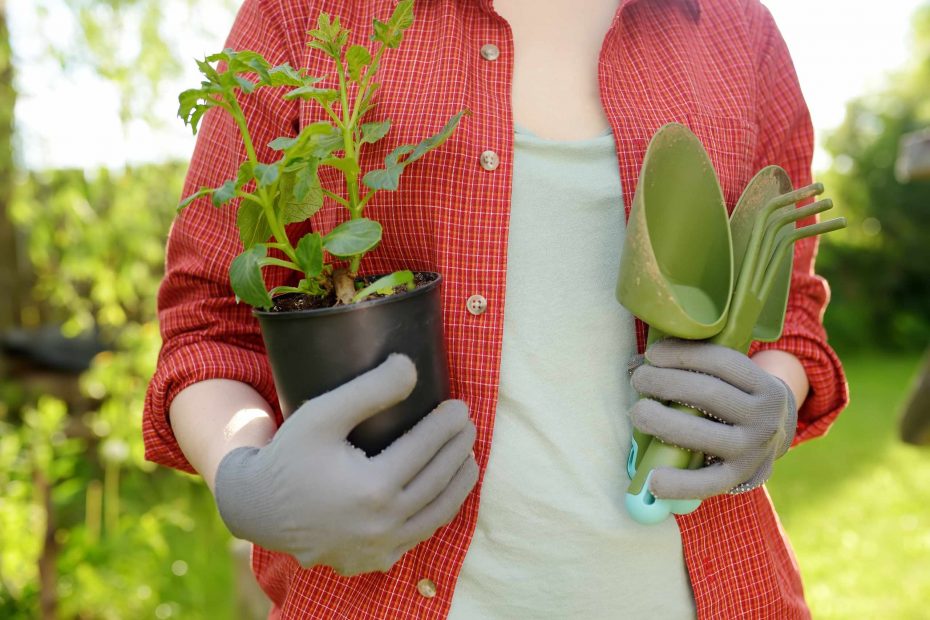
Seed packets can appear straightforward until you get your hand into your soil, wondering how deep to plant your seed. Different seeds require different treatments based on their shape and size: round seeds, flat seeds, long seeds, and tiny seeds are not all treated equally. Some seeds merely need a tiny cover of potting mix while others need more interaction with the surrounding soil. If every seed you are planting is placed at the same depth, you may have uneven germination long before your seedlings reach the soil surface.
It is easy to plant your seed deeper than it requires, thinking that burying it will be better for it. Bigger amounts of soil seem safer, particularly when planting a very small seed into the soil with an exposed soil surface. However, remember that seedlings have very little energy reserves stored within the seed. If they must push through too much soil, it can weaken their growth, make them emerge later than expected, or prevent them from surfacing entirely. Planting too shallowly can be problematic too. If your seed is too close to the soil surface, it may dry up too quickly before it has enough moisture, can move during watering, or struggle to make proper contact with the moist soil surface.
Incorrect spacing can also be an issue. When first planting your seeds, your tray can look like a very productive plant starter. However, once the seeds begin to germinate, all of these small seedlings can begin to compete with each other for resources like light, air, and root space. They can become leggy as they try to stretch upwards to find room for leaves, and the plants may never really produce large enough leaves because they are struggling against their neighbors. The soil may look full, yet because the seedlings are all bunched up, roots can become tangled while uneven watering may result in the soil around each seedling not receiving the necessary moisture.
Before you plant any seeds into your garden or any seed tray, refer back to the seed packet rather than guessing. Look at the suggested seed planting depth and spacing instructions on the seed packet, and then assess this in relation to the actual size of the seeds you are holding. Create a small groove or hole with your hand, plant labels, pencil, or something small. Be mindful not to plant so many seeds in an area that you would feel tempted to. It is better to leave some room for some seedlings that may die later on and for the stronger seedlings to grow well rather than planting too many into an area where thinning is almost immediately needed.
If you water your seed tray too heavily after planting, you may be undoing the good work you have done. Watering from a watering can may pull up shallowly planted seeds, create ridges or hills in the potting mix, or cause your seeds to cluster together. Watering with a spray bottle, watering can with a rose head, or from the side of your container can help keep the soil surface as flat and even as possible. You should always do a quick check on your seeds after you water them; if the seeds move, cluster, or become visible, move them around until you are happy with how you see them. Doing so now can make you much less confused if you later discover clumps of seedlings where only one was expected.
Finally, if you are really struggling to work out a good spacing for your seeds, try planting your seeds in only one section of your garden in a more accurate way than you would elsewhere, and take notes in a garden planner on exactly how deep you planted them, how far apart they were spaced, and when they emerged. If you find this area looks different than where you planted too many, even if it is a tiny difference in the number of days taken to germinate, it does not make a real difference. Later on, when looking at the seedlings themselves, better spacing may result in much straighter stems, leaf shapes are much more distinct, and watering is not nearly as difficult.
Do not view thinning your seedlings after the seeds emerge as an issue you have caused yourself, but rather as part of the success of your garden planning. Seedlings should be handled gently and with care when they are removed from the overcrowded seedlings. When seedlings are small, be mindful not to tug at them as this may disturb the roots of your nearby seedlings; instead use some small clippers to snip at the weak seedlings. Remove those that do not have better spacing or strong straight stems with healthy looking leaves. Remember that better growth often occurs when planting fewer seeds than there are seeds in the package, giving space for those seedlings that remain.